
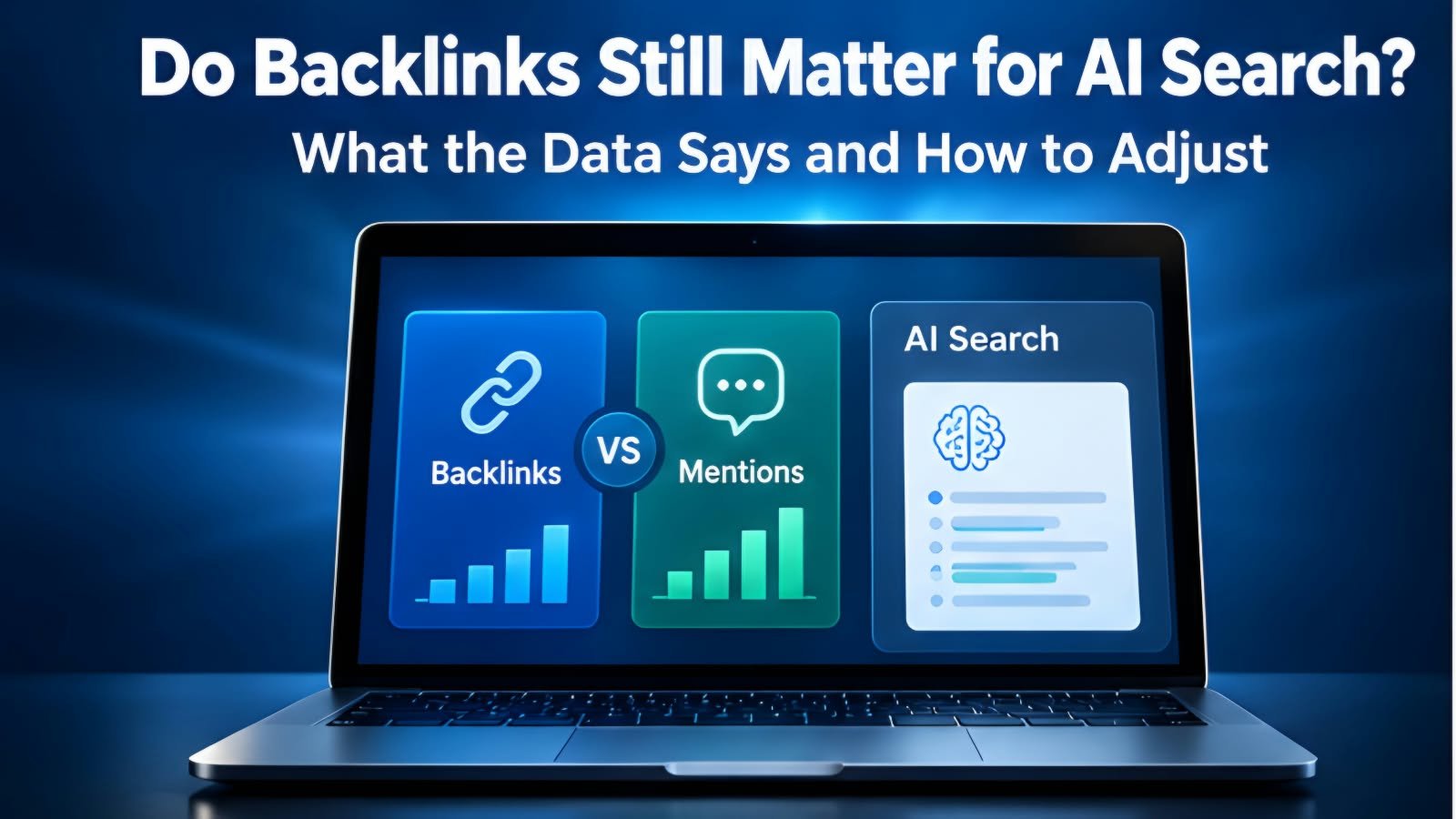
Every few months, someone declares backlinks dead. This time the argument comes with numbers: several studies say brand mentions line up with AI visibility far better than links do. If you buy or build links for a living, that deserves a straight answer, not a hot take.
The honest answer is more nuanced than the headlines. The studies disagree with each other, they measure different platforms, and they describe correlation, not cause. This article walks through what the data shows, where it conflicts, and what it means for how you plan link building from here.
What the Ahrefs Data Actually Found
The study everyone quotes comes from Ahrefs. Looking at 75,000 brands, it found that branded web mentions correlated with AI Overview visibility at 0.664, while the raw number of backlinks came in at 0.218. That is roughly a three-to-one gap, and it explains the “mentions beat links” headlines.
Two details change how you should read it. The same research found YouTube mentions had the strongest correlation of any factor, and schema markup showed no measurable effect on citations. The sample matters too: the brands were filtered to a Domain Rating above 40 on keywords with solid search volume. So the data describes established brands competing for real queries, not every site on the web.
One more caution. Big brands collect mentions, links and citations all at the same time. A correlation tells you these things travel together. It doesn’t prove that mentions cause citations.
Where the Studies Disagree
If mentions were the whole story, every study would show it. They don’t. SE Ranking analyzed 129,000 domains and found referring domains to be the strongest single predictor of ChatGPT citations. One roundup of that research reports that sites with more than 32,000 referring domains were about 3.5 times more likely to be cited by ChatGPT.
Platform matters too. The link between mentions and visibility was about 0.65 on Google AI Overviews, 0.30 on Perplexity and 0.15 on ChatGPT. In other words, “mentions beat links” is mainly an AI Overviews finding. ChatGPT seems to lean more on traditional authority.
Some vendor tests contradict both camps. One AEO platform’s own test found essentially no relationship between backlinks and citations across ChatGPT, AI Overviews and Perplexity. Treat results like that carefully, since every tool uses its own method and has a product to sell.
The practical lesson: no single number settles this. Different engines reward different things, so a strategy built on one study will miss the others.

Most Citations Aren’t Yours to Win
Here is the part marketers tend to skip. In Ahrefs’ data, about two-thirds of ChatGPT’s top 1,000 cited pages came from sources a brand can’t influence, such as Wikipedia, homepages and app stores. Reddit also shows up heavily: Profound’s research found Reddit leads in both Google AI Overviews and Perplexity, and only 11% of domains cited by ChatGPT are also cited by Perplexity.
On top of that, the answers keep moving. One analysis found that 40 to 60 percent of cited domains change from month to month. A screenshot saying “we’re cited” proves very little. You need to measure over time, and you need to be present in many places, not just one.
What This Means for Your Link Building
None of this says to stop building links. Links still feed classic rankings, and rankings still feed everything else. It says to change what you ask a placement to do.
1. Buy placements that name your brand in context
A link with the anchor “click here” passes a signal. A paragraph that explains what your brand solves, on a page people actually read, does two jobs at once: it links and it mentions. Ask for brand-name anchors and a sentence of context, not a bare URL in a footer. Even an unlinked mention is worth having, since Ahrefs’ data shows unlinked brand mentions correlating about three times more strongly with AI Overview visibility than backlinks.
2. Work backward from your buyers’ prompts
Write 20 to 30 questions a real customer would ask, such as “best invoicing software for freelancers” or “is a robo-advisor worth it.” Run them in ChatGPT, Perplexity and Google, and record which domains get cited. Those are your target publishers. A placement on a site AI already pulls from beats a placement on a site that just has a nice DR.

3. Build entity consistency
Use the same brand name, one-line description and key facts everywhere you appear. Third-party mentions, earned media and entity consistency matter more in AI search than most brands realize. Messy naming makes it harder for any system to connect the dots.
4. Go where mentions actually happen
Strong brand mentions across independent sources like Reddit, YouTube and review sites correlate with higher citation probability. A short, honest product demo on YouTube or a useful answer in a relevant community can matter as much as one more guest post. Just don’t spam. Communities remove promotional posts quickly, and promotional tone correlates negatively with citation.
5. Keep the fundamentals
Keep earning relevant referring domains, because the ChatGPT-focused data still points that way. Just stop treating raw link counts as the goal.
Finance and SaaS: Where It Plays Out
Finance. Trust is everything here, and the sources AI systems favor tend to be established. Still, Perplexity has been observed reaching for niche and regional sites in health, finance and local blogs, which is good news for smaller, well-run finance publishers. For a finance brand, accurate, clearly sourced content on credible niche sites can earn citations without a Wikipedia-sized profile.
SaaS. Buyers compare tools, so comparison and “alternatives” content gets pulled into answers. One analysis suggests comparison pages with multiple tables earn more ChatGPT citations, though treat that as a hint, not a rule. Pair your own comparison pages with mentions on review sites, YouTube demos and honest community threads.

How to Measure Without Fooling Yourself
Clean attribution doesn’t exist yet. Analytics tools often can’t separate AI Overview traffic from regular organic traffic, so don’t expect a neat report. Instead:
- Track your prompt set every month, because citations move.
- Watch branded search volume and direct traffic for lift.
- Add a “How did you hear about us?” field to your forms.
- Note which placements get cited later, and buy more of that publisher type.
Final Thoughts
Backlinks haven’t died. They’ve become one signal among several, and a brand that is mentioned, discussed and trusted across the web has the edge in AI answers. The smart move is to build links that also earn mentions: relevant sites, brand-name anchors, real context and publishers your buyers already read.
At Zee LinkHub, we place guest posts and niche links on finance and SaaS websites with that in mind. If you’d like a placement plan built around sites that both AI engines and your customers trust, request a quote. And if you’re still weighing formats, our breakdown of guest posts vs link insertions is a good place to start.

Leave a Reply