
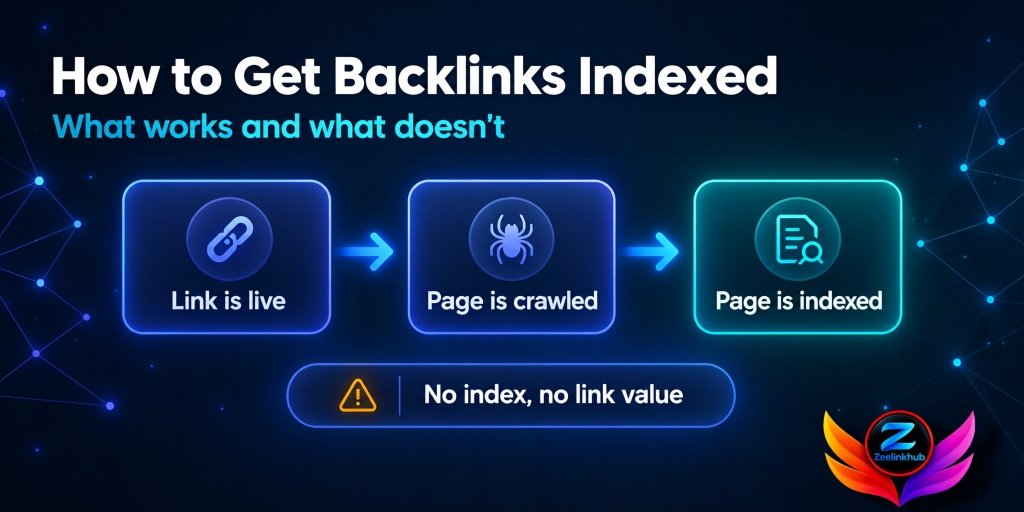
The link is live. The anchor looks right, the page loads fine, and the person who placed it has moved on to their next task. Two weeks later your rankings haven’t budged, and you start wondering whether the link was a dud.
Often the link isn’t the problem. The page it sits on just hasn’t made it into Google’s index, which means Google may never have counted the link at all. If you’re trying to work out how to get backlinks indexed, that’s the right place to start, because a link nobody has crawled can’t help anyone.
So here’s why it happens, how to check, and what actually helps. Some of it you control. A lot of it you don’t, and I’ll be upfront about which is which.
Why a backlink that isn’t indexed does nothing
Google finds a link by crawling the page that holds it. If that page never gets crawled, or gets crawled and then left out of the index, the link has nothing to attach to. From Google’s side, it doesn’t exist.
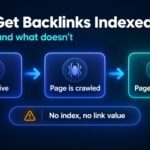
That makes it a two-step process: crawl, then index. Crawling just means a visit. Indexing means Google decided the page was worth storing and showing. Plenty of pages get visited and still don’t make it in, especially thin pages, near-duplicates and pages on sites with little trust.
It’s also why a link can sit live for a month with zero effect. The first thing I check on a “dead” link is the page holding it, not the anchor text or the domain rating.
Why Google skips some linking pages
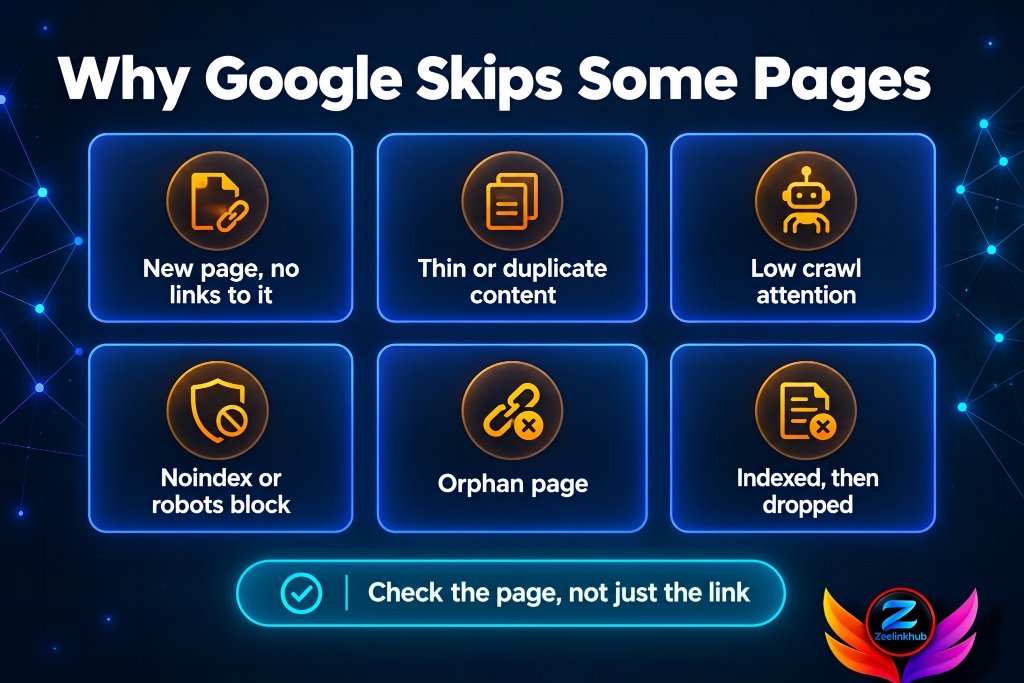
Most cases come down to a short list.
The page is new and nothing points to it. Google finds pages through links and sitemaps. A fresh post on a small blog, with no internal links and no mentions anywhere, can sit unseen for weeks. This is the most common reason, and the least worrying.
The content is thin or very close to other pages. A post with a couple of short paragraphs, or one that copies what’s already out there, often lands in the “crawled, currently not indexed” pile. Google visited, shrugged and moved on.
The site itself gets little crawl attention. Google visits small, rarely updated sites less often, so everything on them takes longer.
There’s a technical block. A noindex tag, a robots.txt rule or a wrong canonical can keep a page out entirely. Sometimes that’s a mistake. Sometimes it’s deliberate.
The page is an orphan. If no other page on its own site links to it, it’s easy to miss.
Or the page was indexed once and then dropped. Google removes pages it decides are low value, and the link goes with them.
How to check whether a backlink is indexed
Before you try any method for how to get backlinks indexed, find out whether there’s a problem at all.
Copy the exact URL of the page that holds your link, type site: in front of it and search. If the page appears, it’s indexed. If you get nothing, it probably isn’t, though the operator isn’t perfect, so treat it as a first check and not a verdict. A second quick test is searching the page’s exact title in quotes.
If the page sits on your own site, Search Console is far better. Paste the URL into the inspection bar at the top and it tells you whether the page is on Google and, if not, why. Two statuses come up a lot. “Discovered, currently not indexed” means Google knows the URL exists but hasn’t visited yet. “Crawled, currently not indexed” means it visited and chose to leave it out. They need different fixes: the first is usually about attention, the second about quality.
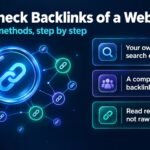
For pages on someone else’s site you can’t use Search Console, so you’re limited to the search checks and whatever your backlink tool reports. Our guide on how to check backlinks of a website covers that side in detail.
How to get backlinks indexed when you control the page
This applies when the link sits on your own site or one you manage: a blog you run, a partner page, a sister site.
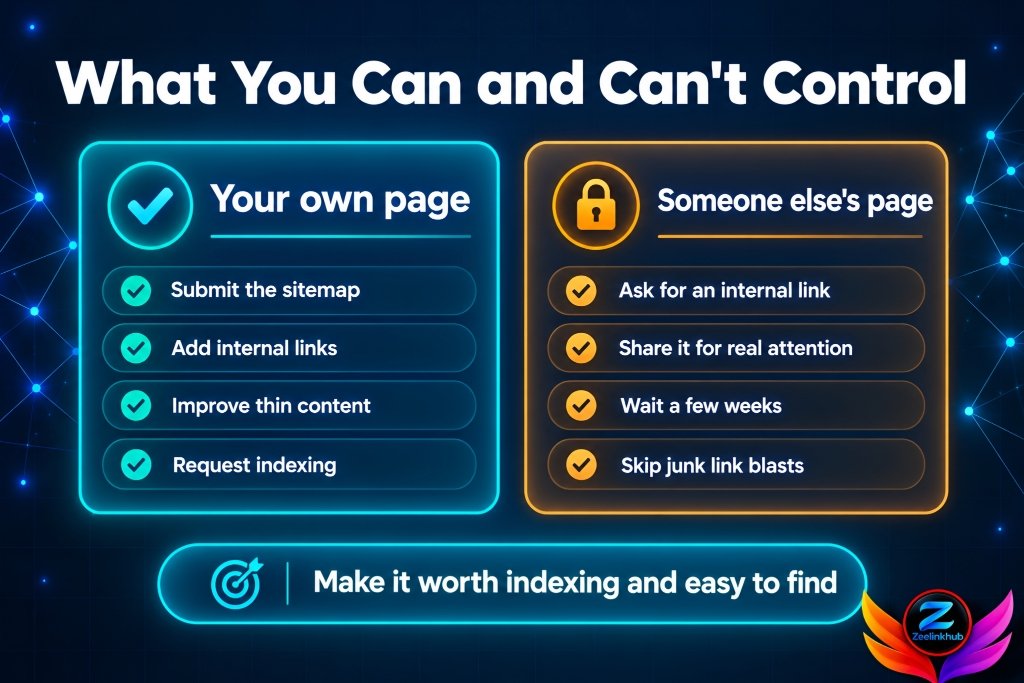
Add the page to your sitemap and make sure the sitemap is submitted in Search Console. Link to it from a page that’s already indexed and crawled often, such as the homepage or a popular article. Internal links are the cheapest way to get a page noticed.
Next, look at the content. If the page is thin, fix that first. It’s the step people skip because it takes effort, and it’s usually what decides the outcome. Add real information, remove duplicated text and make the page worth keeping.
Then use the URL Inspection tool and request indexing. It’s a nudge, not a guarantee, and there’s a daily limit, so save it for pages that matter. Requesting the same URL over and over doesn’t speed anything up.
How to get backlinks indexed on someone else’s site
This is the harder case, because you can’t touch the page. What you can do is limited, and most of it is about making the page easier for Google to find.
Ask the site owner. If it’s a guest post or a partnership, a short, polite note asking them to link to the post from another page on their site, such as a category page, a related article or the author page, often does more than any outside trick. Internal links from an already indexed page are what pull a new post in.
Links placed inside articles that are already indexed tend to get picked up faster than links on brand-new posts, because the page is already known. That’s one reason niche edits are noticed quickly when the host page is healthy.
You can also point some real attention at the page. A share on social media or a mention in a newsletter creates a path for crawlers, though it’s a small nudge and not a switch. Links to the linking page from other sites can help too, but keep it modest and natural. Mass-linking a page you don’t own can backfire.
And be patient first. A lot of new pages on healthy sites get indexed within days or a couple of weeks without any help. Our article on how long backlinks take to work gives a realistic window.
If weeks go by and the page still isn’t indexed, ask whether it’s worth more effort. Sometimes the right call is to treat that link as a miss and put your energy into a better placement.
Shortcuts to avoid when you’re learning how to get backlinks indexed
Search this topic and you’ll find plenty of “instant indexing” promises. I’d treat most of them with caution.
Bulk indexing services and ping tools have mixed results at best. Some pages they push in drop out again a few weeks later. Blasting a URL with spammy links to force a crawl can attract exactly the kind of links you’d later have to clean up, and our guide to toxic backlinks shows how messy that gets.
Google’s Indexing API is another popular suggestion. It’s officially meant for specific page types, such as job postings and live streams, so using it for ordinary pages isn’t a dependable approach.
Instant indexing features in some SEO plugins mostly notify other search engines. They can be useful for Bing and similar engines, but they don’t reliably make Google index anything.
The boring route to how to get backlinks indexed works best: make the page worth indexing, make it easy to find and give it time.
How long to wait before you worry
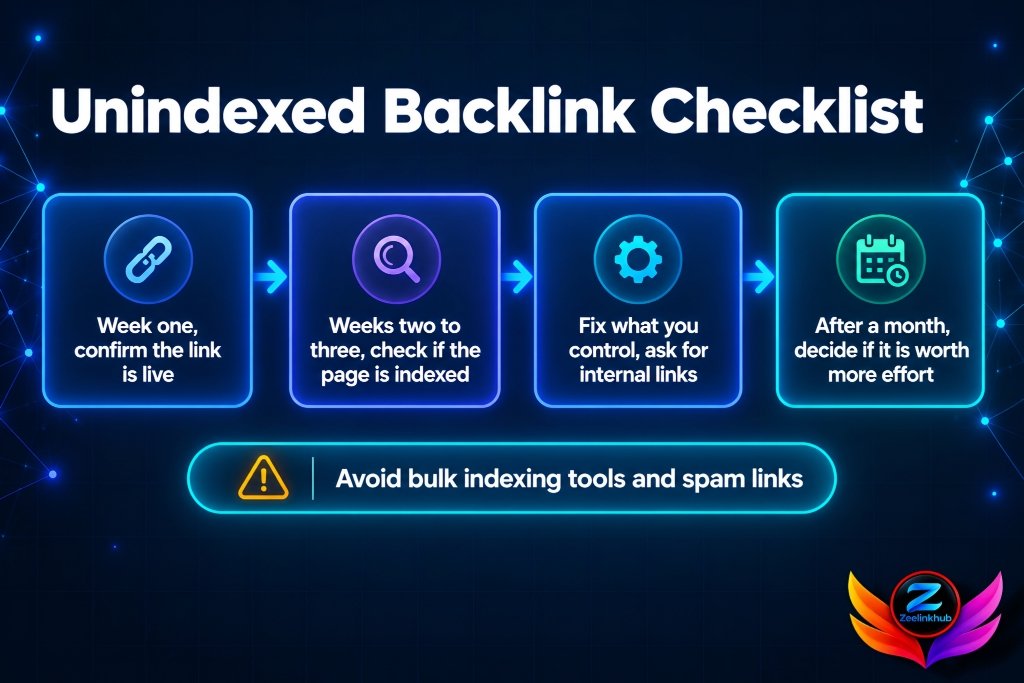
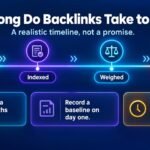
A simple timeline helps. In the first week, do nothing except confirm the link is live. Around weeks two and three, check whether the linking page is indexed. If it isn’t, work through the steps above. After about a month with no indexing and no change at all, it’s fair to decide that page isn’t going to carry the link.
That’s a rough guide, not a rule. Big, busy sites get picked up fast. Small ones take longer. Pace matters on your side too, and our piece on link velocity explains why a steady flow looks better than one big batch.
A quick example
Say you land a link on a mid-sized industry blog. Three weeks later nothing has changed. You search the URL and it isn’t indexed. Looking closer, the post sits three clicks deep with no links from the homepage or category page, and it’s quite short.
You write to the editor, who adds a link from a related article and the category page. A week later the page shows up in Google, and a few weeks after that impressions for your target page start to rise. The link never changed. The page just became visible. That’s usually the story behind how to get backlinks indexed: small, boring fixes on the linking page.
How to get backlinks indexed for finance and SaaS sites
In finance, linking pages on respected publishers usually get crawled quickly, so a long delay there is worth a note. On smaller finance blogs, indexing is slower and many pages never make it, so the quality of the site matters more than the link itself.
SaaS links often come from partner pages, integration directories and review sites. Those can be slow to update or built from templates that Google doesn’t prioritize, so they sometimes aren’t indexed at all. When you’re working out how to get backlinks indexed for a SaaS site, check those directory-style pages first, because they’re the most likely to be missing.
Mistakes when learning how to get backlinks indexed
Assuming the link is bad when the page simply isn’t indexed. Checking the domain and not the exact URL. Requesting indexing again and again. Paying for cheap indexing tools. Building junk links to the linking page. And giving up in week one.
One more worth adding: never auditing. A regular backlink audit shows which links are still live and which pages hold them, so you spot an unindexed one early instead of months later.
Final thoughts
A backlink only works once Google has seen the page that holds it. So when a link seems to do nothing, check the linking page first, fix what you control and be patient with the rest. Knowing how to get backlinks indexed won’t make every link count, but it explains most of the “dead” ones.
If you’ve lost links along the way, link reclamation covers how to win them back.
Leave a Reply