
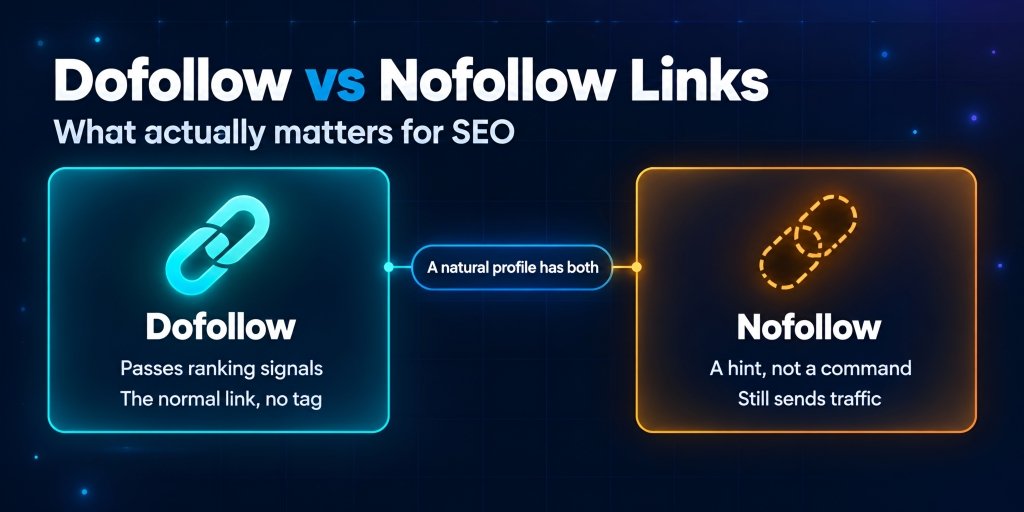
Few SEO terms cause as much confusion as these two. Ask ten people about dofollow vs nofollow links and you’ll hear ten versions. Nofollow links are worthless. Dofollow links are all that count. Google ignores the whole thing. All three are a little off.
The short version: a dofollow link usually passes ranking signals, and a nofollow link usually doesn’t, or at least not in the same way. But “usually” is doing a lot of work in that sentence, and the rules shifted a few years back. Below is what’s still true about dofollow vs nofollow links, what isn’t, and how I’d think about both types when looking at a real link profile.
What dofollow and nofollow links actually are
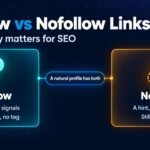
Every link can carry an optional attribute in its HTML called rel. A nofollow link has rel=”nofollow”, which tells search engines not to treat it as an endorsement. That’s all it does. A dofollow link is simply a link without that tag.
Here’s the odd part. “Dofollow” isn’t a real attribute. You’ll never find it in the code. It’s a nickname SEOs use for any normal link, which is why people describe it so differently. If a link has no nofollow, sponsored or ugc value in its rel attribute, it’s a regular link, and regular links are what everyone means by dofollow.
So why does the tag exist at all? Early on, spammers dropped links everywhere: blog comments, guestbooks, forums. Nofollow let site owners say “I’m not vouching for this one.” Comment sections and user profiles got it by default, and the rest of the web adapted.
Dofollow vs nofollow links: how Google treats them today
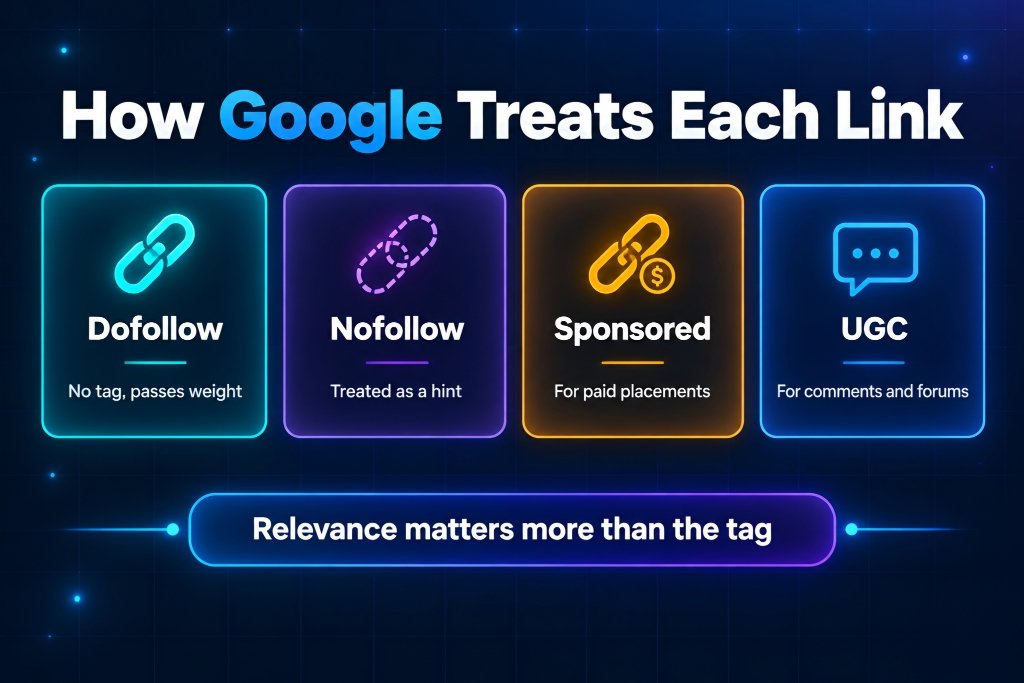
Until 2019, Google said it ignored nofollow links for ranking. Then it changed the rules. Nofollow became a hint instead of a command, and two new attributes arrived next to it.
That means Google may use a nofollow link as a signal in some cases, and it decides for itself. It doesn’t promise to, and it doesn’t tell you when it does. So “nofollow passes absolutely nothing” is no longer strictly accurate. “Nofollow can’t be relied on to help rankings” is closer to the truth.
Dofollow links are the ones you can count on to pass weight, though even those aren’t equal. A dofollow link from a respected page on your topic is worth far more than one from a random page that happens to allow it. The tag is only the first filter. Relevance, the strength of the linking page and the text around the link matter just as much.
Where each type shows up in the real world
Knowing where each kind tends to appear helps you read a backlink report without guessing.
Dofollow links come from most editorial mentions: a journalist citing your data, a blogger recommending your tool, a resource page listing useful sites. People give those freely, and by default they’re untagged.
Nofollow links cluster where the site owner can’t vouch for every link. Blog comments, forum signatures, social profiles and many wiki-style sites tag outbound links automatically. Some large publishers nofollow every outside link as a policy, whatever the article says.
Then there’s a gray middle. Some sites tag links to commercial pages and leave the rest alone, or mix both types in the same article. Don’t assume anything from the domain. Check the actual link.
Do nofollow links help SEO at all?
In the debate over dofollow vs nofollow links, this is the part people skip. Directly, nofollow links may or may not move rankings. But rankings aren’t the only reason a link is worth having.
A nofollow link in a popular article still sends visitors, and some of them become customers, subscribers or future linkers. A mention on a busy page puts your brand in front of people who might write about you later with a normal link. And a profile made up only of dofollow links from similar sources can look manufactured, because real link profiles are messy.
I wouldn’t spend serious effort chasing nofollow links purely for rankings. I also wouldn’t turn one down if it came from a good, relevant page.
Sponsored and UGC: the other two attributes
Since 2019 there are three rel values, and people mix them up all the time.
The sponsored value is meant for paid placements, ads and affiliate-style links. The ugc value is for user-generated content such as comments and forum posts. Nofollow is the general catch-all when neither fits.
Google treats all three as hints. In practice the label matters most for how honestly a site describes its own links. If you want the full picture on how paid links are viewed, our article on whether Google penalizes paid backlinks goes through it in detail.
How to check whether a link is dofollow or nofollow
Checking dofollow vs nofollow links takes under a minute per page, and the easiest way needs no tools. Right click the page, choose Inspect, and press Ctrl+F to search for the linking domain. Look at the anchor tag. If you see nofollow, sponsored or ugc in the rel attribute, it isn’t a regular link. If there’s no rel attribute, or it holds something unrelated, it’s a normal one.
Browser extensions can highlight nofollow links on any page, which is quicker when you’re checking a lot of them. Most backlink tools also show a followed or nofollow flag next to each link. Just remember that flag is a snapshot. Sites change their templates, and a link that was dofollow last month may carry a tag now.
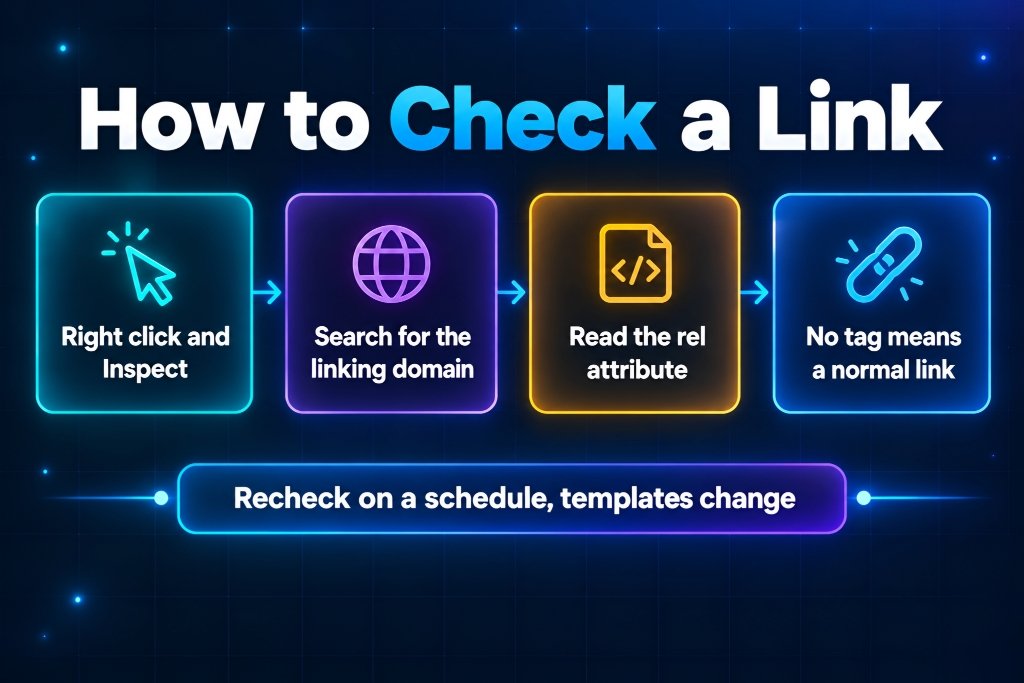
That’s one reason to recheck links on a schedule. Our guide on how to check backlinks of a website covers building that habit, and a proper backlink audit will catch the changes.
What a natural mix of dofollow vs nofollow links looks like
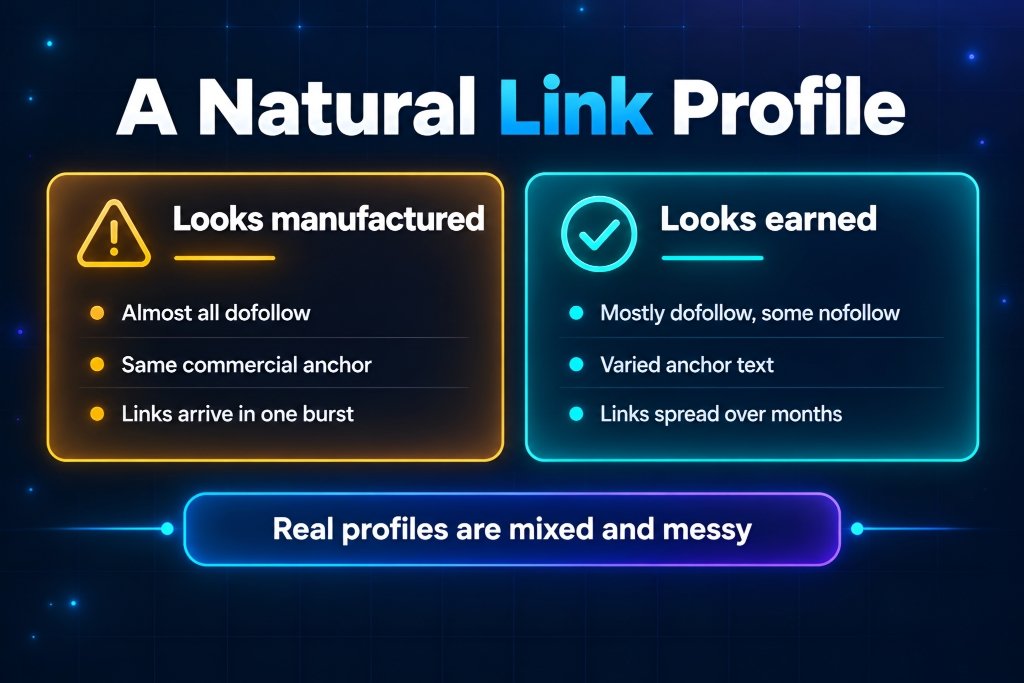
Is there a right ratio? No. Anyone quoting a perfect percentage is guessing. What you can say is that real profiles contain both types, and that dofollow usually makes up the larger share for sites that earn mostly editorial links.
If nearly every link you have is dofollow and they all use the same commercial anchor, that stands out. A profile with some nofollow links from forums, directories, social profiles and press pages looks like a site people actually talk about. Read the mix next to your anchor text distribution, because the two patterns tend to show up together.
Pace counts too. A pile of dofollow links arriving in one week looks very different from the same links spread over months, which is what our piece on link velocity is about.
Which type should you go after?
For ranking, dofollow links from relevant, well-regarded pages are what you want most. That’s the simple answer. But I’d frame the goal differently: go after links from places that make sense for your topic, and treat the attribute as a secondary check.
When people ask which side of dofollow vs nofollow links to chase, the honest answer is that it depends on the page. A relevant dofollow link from a small niche blog can beat a nofollow link from a giant site for one specific keyword. Yet the giant site might bring more visitors and recognition. A nofollow link from a major publication can still help with trust and discovery. There’s no universal winner, which is exactly why the tag alone can’t decide anything.
If you’re deciding how many links to aim for overall, how many backlinks you need to rank helps set a realistic target.
A quick example
Say a SaaS site has 60 referring domains. Of those, 38 link without any tag, 15 use nofollow and 7 use sponsored or ugc. At first glance the 38 look like the whole story.
Then you open them. A dozen of the untagged ones are tiny directories nobody visits. Meanwhile three of the nofollow links sit in widely read comparison articles and send steady traffic every week. So the tag told you something, but not nearly as much as the page did.
Dofollow vs nofollow links for finance and SaaS sites
In finance, plenty of high-trust sites nofollow outbound links on principle, especially in sponsored or affiliate-heavy content. That doesn’t make the placement worthless. A mention on a respected finance site builds credibility even when the link is tagged. Still, it helps to know which of your best links are untagged, because those are the ones carrying weight.
SaaS sites collect a lot of links from review sites, directories and integration listings, and those often use nofollow or sponsored. Treat them as visibility and referral sources first. Your editorial links, such as mentions in guides, comparisons and customer stories, are the ones to track for ranking.
Myths I keep hearing
Most myths about dofollow vs nofollow links come from advice that was true years ago and never got updated.
“Nofollow links are useless.” Not true. They send traffic, build awareness and can act as hints.
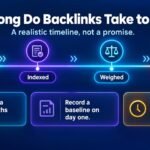
“One dofollow link will fix my rankings.” Also no. A single link rarely changes much, and our article on how long backlinks take to work explains why results take time.
“A profile with only dofollow links is ideal.” It looks unnatural, and real sites never end up that way.
“If a link is nofollow, Google can’t see it.” It can see it, crawl it and may use it as a hint.
“Dofollow is an official tag.” It isn’t, as covered above.
Mistakes with dofollow vs nofollow links
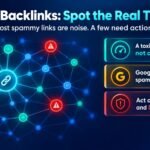
Judging a link by its tag alone. Ignoring relevance. Trusting a tool’s flag forever instead of rechecking. Chasing links for the attribute rather than for the page they sit on. And panicking over a handful of strange links, when most of them are harmless. If one really worries you, our guide to toxic backlinks shows how to tell the difference.
The biggest mistake is treating this as a battle with a winner. It’s a checklist item.
Final thoughts
Dofollow vs nofollow links comes down to a few simple points. Dofollow links are the ones you can count on for ranking. Nofollow links still bring traffic, awareness and the odd hint. Real profiles have both. Look at relevance first, then the tag, and then check it again later.
If you’re curious how any of this connects to AI-driven results, do backlinks matter for AI search is a good next read.


Leave a Reply