
Every few weeks someone asks us the same question. “How many backlinks do I need?” They want a number. Fifty, maybe. A hundred if we’re feeling generous.
We get why. A number feels safe. You can budget for it, put it in a spreadsheet, show it to your boss. The trouble is that any number we gave you without looking at your keyword would be a guess. A page going after a niche SaaS term and a page chasing “best credit cards” live in completely different worlds.
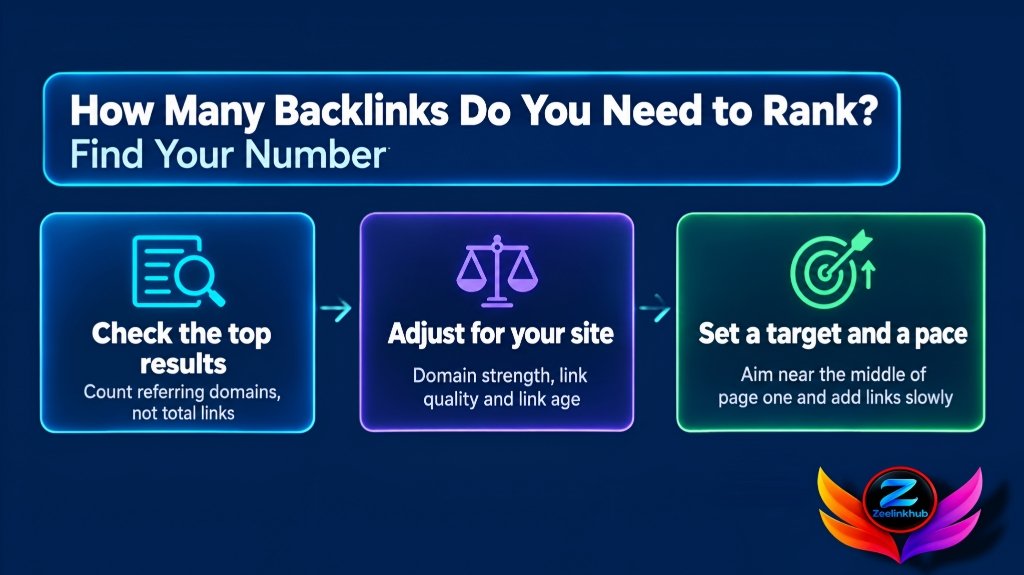
What we can do is show you how to work out the number yourself, for the page you actually care about. It takes about twenty minutes and a link tool, free or paid. Let’s walk through it.
Why there’s no magic number
If you’ve read other guides on this, you’ve probably seen ranges like “200 to 400 links for a competitive keyword.” Those numbers float around because they sound helpful. They aren’t tied to anything real.
Here’s what the research does say. Backlinko studied 11.8 million Google results and found that the page in first place had about 3.8 times more backlinks than the pages in positions two to ten. Ahrefs found that top pages also keep picking up new links at a steady pace, with monthly growth somewhere between 5 and 14.5 percent in the data one SEO firm summarized.
That sounds like a clear rule: more links, higher rank. But Ahrefs itself points out the chicken-and-egg problem. Do pages rank because they have links, or do they get links because they already rank? Probably both, and the two feed each other.
Google’s own people have also said, more than once, that the raw number of links isn’t the point. A page can rank with very few links when everything else lines up. So the research tells you links matter. It doesn’t tell you how many you need.
Start with the pages that are already winning
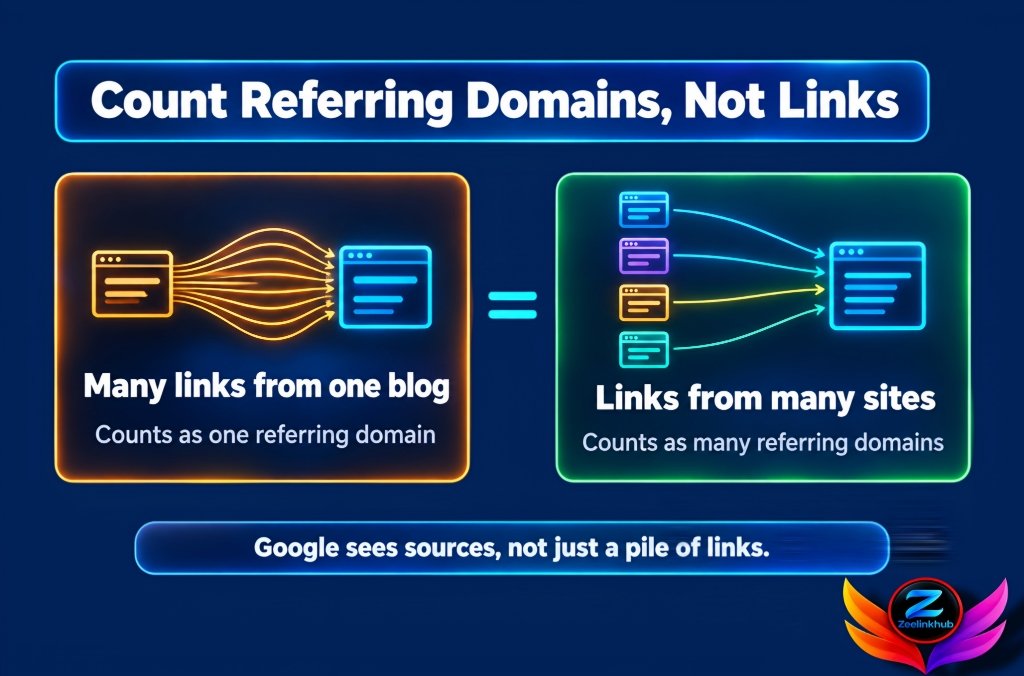
Pick one keyword and one page on your site. Search the keyword and open the top five results. For each one, check how many referring domains link to that exact URL. Referring domains, not backlinks. Fifty links from one blog count as one source, and Google treats them that way.
Write the numbers down. Say the top five have 38, 25, 21, 17 and 12. That’s your first real data point. It tells you what Google is willing to rank for this keyword today.
If every result is a giant with hundreds of referring domains, take a breath. You may have picked a keyword that’s too big for your site right now. Better to find that out before you spend money, not after.
Then adjust for who you’re up against
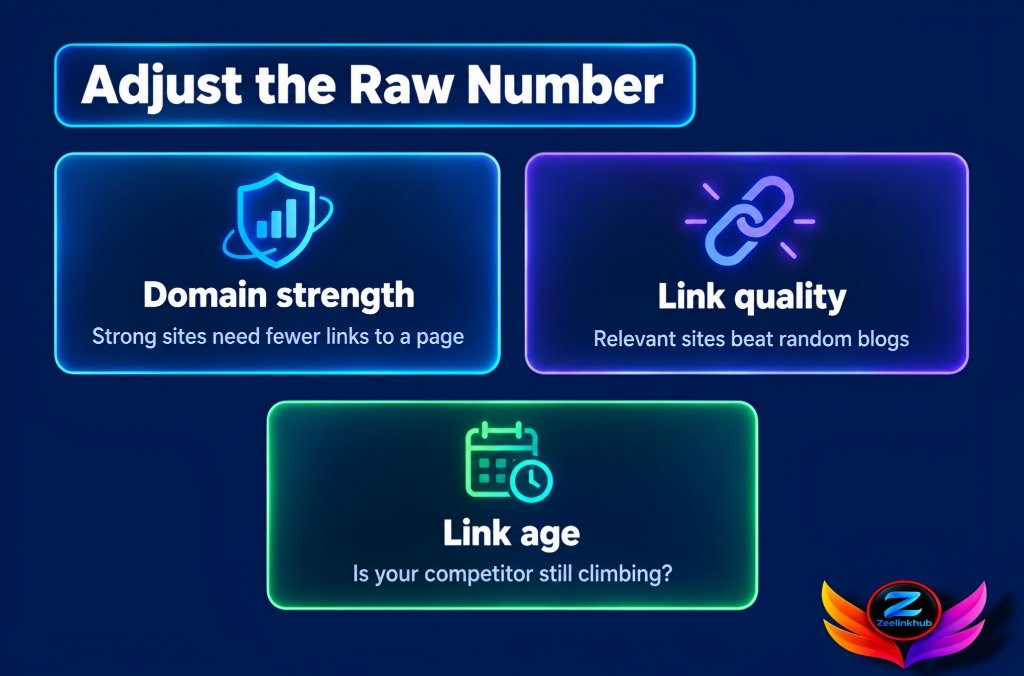
The raw number lies a little, so we adjust it for three things.
First, domain strength. A site with thousands of links across its pages can rank a new article with very few links to that page, because its overall authority carries it. A newer site doesn’t get that help, so you usually need to match the page-level count more closely.
Second, link quality. Twelve links from sites your customers really read beat forty links from random blogs. Click through a handful of your competitor’s links. Are they real articles? Do those sites cover the same topic?
Third, link age. A page that collected its thirty links over four years looks very different from one that got them last month. Open the referring domains graph in your tool. If the line is flat, that competitor is coasting. If it’s climbing, you’re chasing something that moves.
A worked example
Let’s say you run a budgeting app and you want to rank a page for “zero based budgeting template.” The top five pages have 22, 18, 15, 11 and 9 referring domains. Two are small blogs, one is a bank, and two are big finance sites.
Your site is young, so you’d aim for something close to position three or four, roughly 12 to 15 good referring domains. Then you’d plan to add a couple each month so you don’t slip behind.
Now check quality. If you can’t think of 12 relevant sites that would plausibly link to a budgeting template, that tells you something.
The real work isn’t buying links. It’s building a template people actually want to link to.
Page links or site links?
People mix these up all the time. Links to your homepage help your whole site a little. Links to a specific page help that page more.
Most of the time you need some of both, with extra weight on the page you’re trying to rank.
There’s another angle. Some studies suggest the total number of referring domains to a whole site tracks traffic better than the count for any single page. That’s a good reason to spread placements across your blog posts and guides instead of pointing everything at one money page.
It’s the same logic we covered in our piece on anchor text distribution.
Speed matters, but slower is safer
Remember that Ahrefs example about a keyword where the leader had 55 referring domains, and the data suggested you might need around 83 links in three months just to keep up? That’s a scary number if you read it too fast. Don’t try to copy it.
A burst of links looks odd, especially when they all come from similar sites. Slow, steady growth looks like a page people genuinely like. We’d take eight good links over three months over thirty in one week, every time. If you’re buying placements, pace them. We wrote about the risks in does Google penalize paid backlinks.

What if you can’t match the numbers?
Then change the target, not the plan. Pick a longer, more specific keyword where the top pages have five or six referring domains. “Zero based budgeting template for freelancers” is a much smaller fight than “budgeting template.” You can win it with a handful of links and a page that answers the question better than the others.
Also keep brand mentions in mind. In AI search, mentions seem to matter alongside links, which we explained in do backlinks still matter for AI search.
What this looks like in finance and SaaS
In finance, expect higher numbers. These topics are competitive and Google is picky about trust, so top pages often come from big publishers. You’ll usually do better with narrow queries tied to a real tool or calculator.
In SaaS, buyers search very specific things, so narrow, product-led pages can often be won with fewer links than broad guides. We think links from sites those buyers actually read matter more than anything else here.
The short version
- Pick one keyword and one page.
- Count referring domains for the top five results, not total backlinks.
- Adjust for your site’s strength, link quality and link age.
- Set a target near position three or four, and a slow monthly pace.
- Recheck in about ninety days and adjust.
Final thoughts
So, how many backlinks do you need? Enough to look like the pages that already rank, from places that make sense for the topic. Your number is probably smaller than the scary ones online and the bigger than zero.
If you’d like help planning placements for a specific page, take a look at our guest posting and link placement services or send us the page and keyword. We’ll tell you straight if the keyword is realistic. And if you’re still choosing a format, our comparison of guest posts vs link insertions is a good place to start.





Leave a Reply